| Longan - Dimocarpus longan | |||||||||||||||||||||||||||||||||||||||||||||||||||||||||||||||
|---|---|---|---|---|---|---|---|---|---|---|---|---|---|---|---|---|---|---|---|---|---|---|---|---|---|---|---|---|---|---|---|---|---|---|---|---|---|---|---|---|---|---|---|---|---|---|---|---|---|---|---|---|---|---|---|---|---|---|---|---|---|---|---|
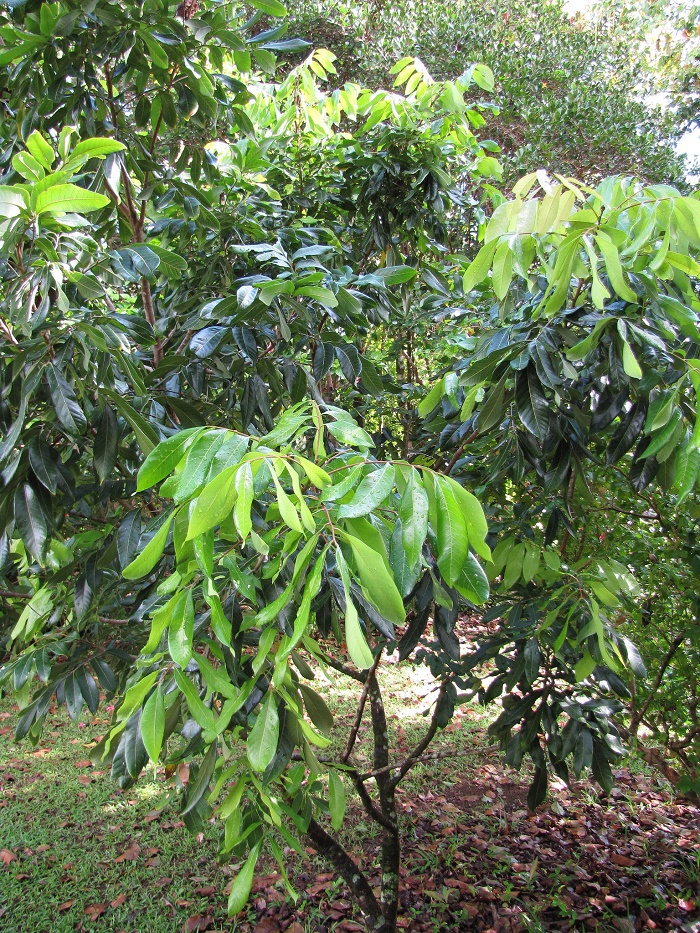
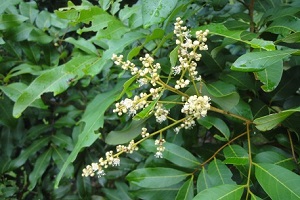
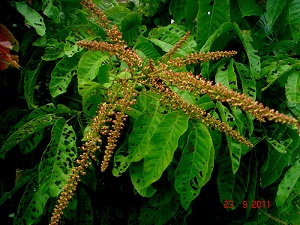
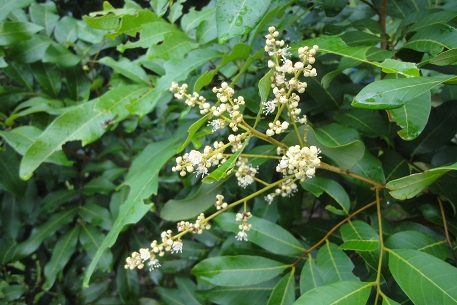
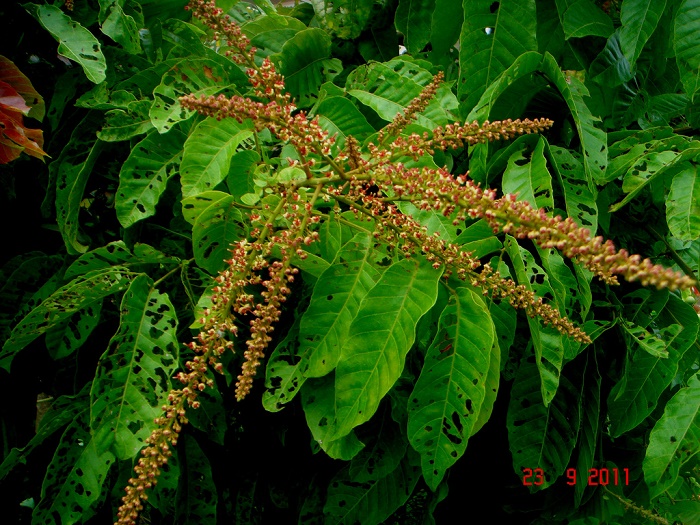
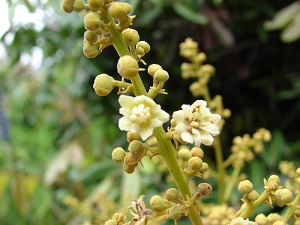
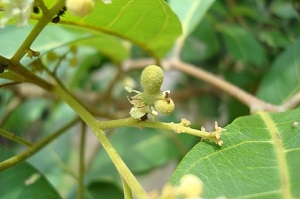
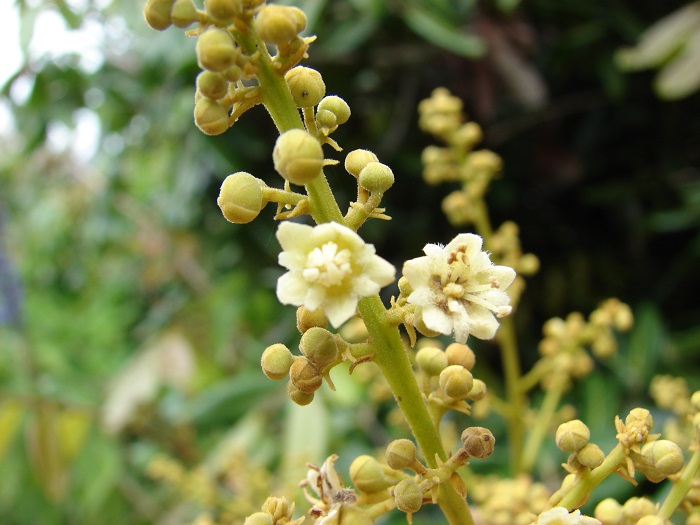
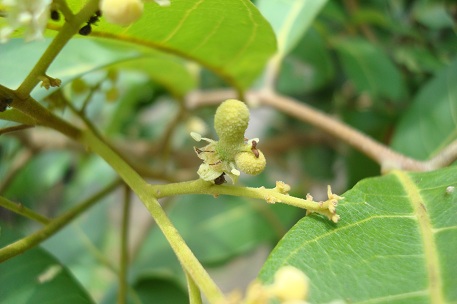
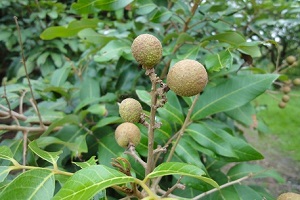
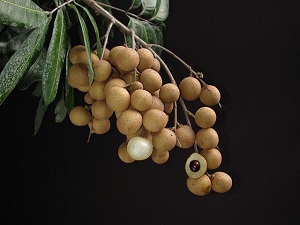
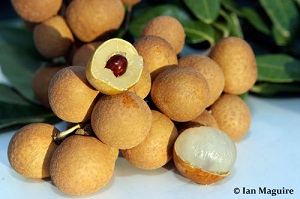
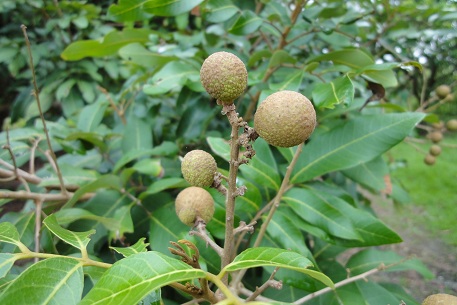
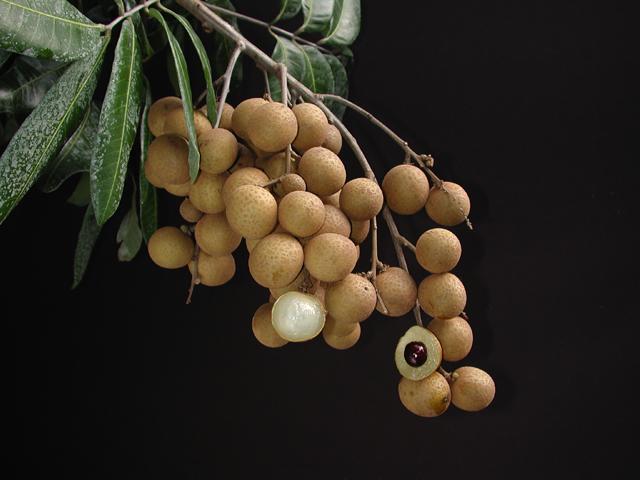
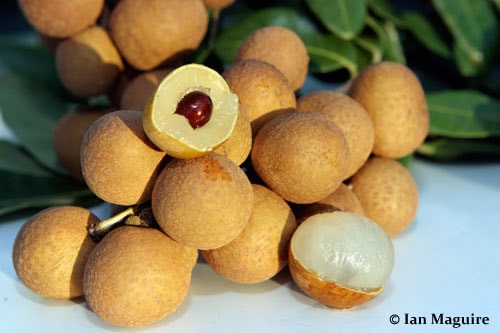
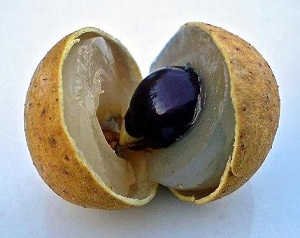
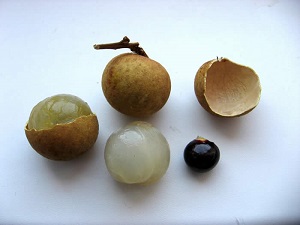
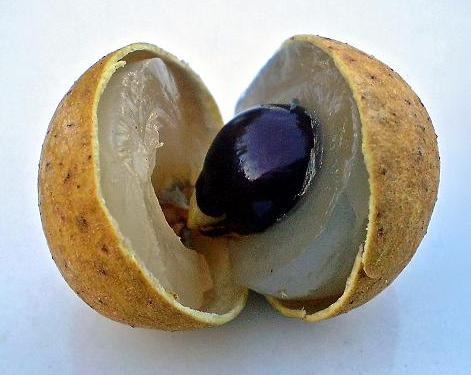
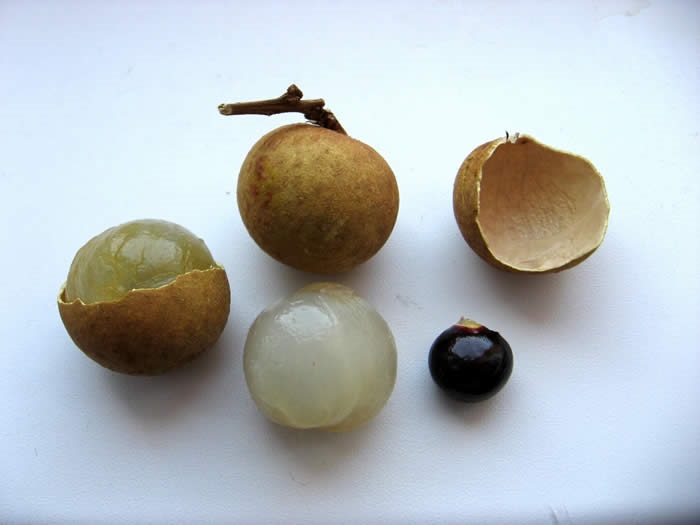
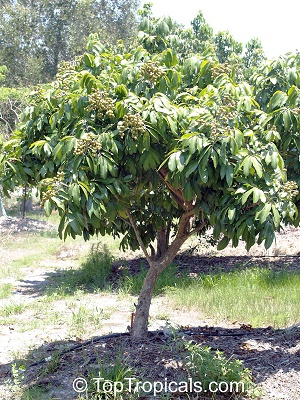
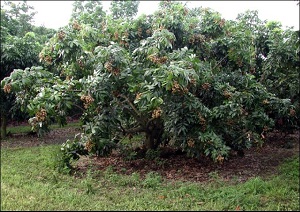
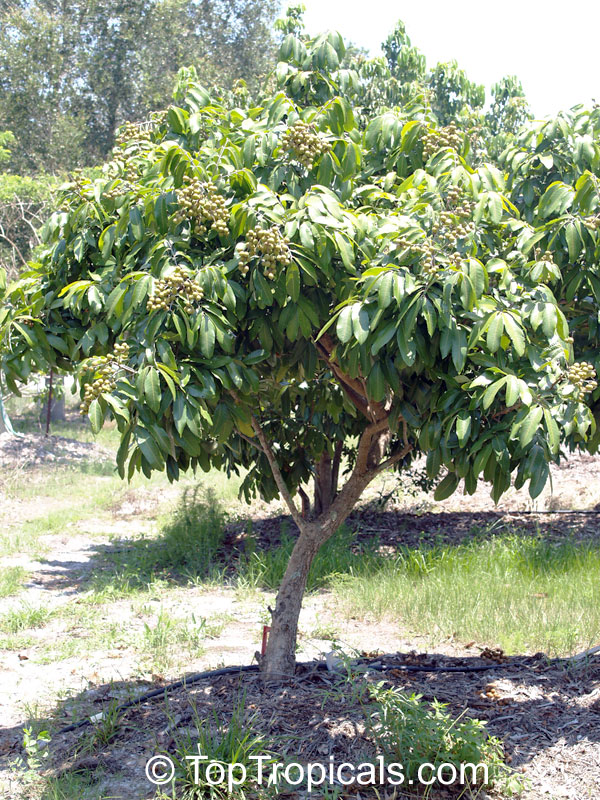
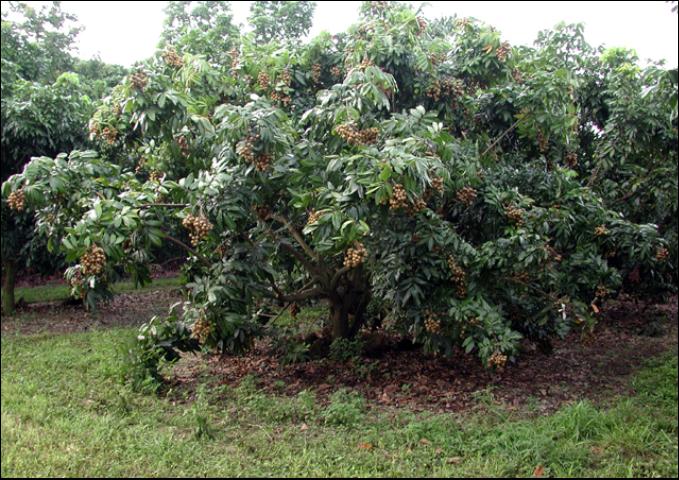
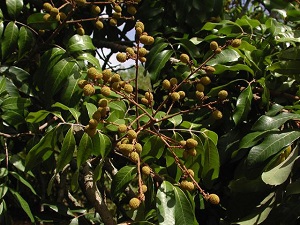
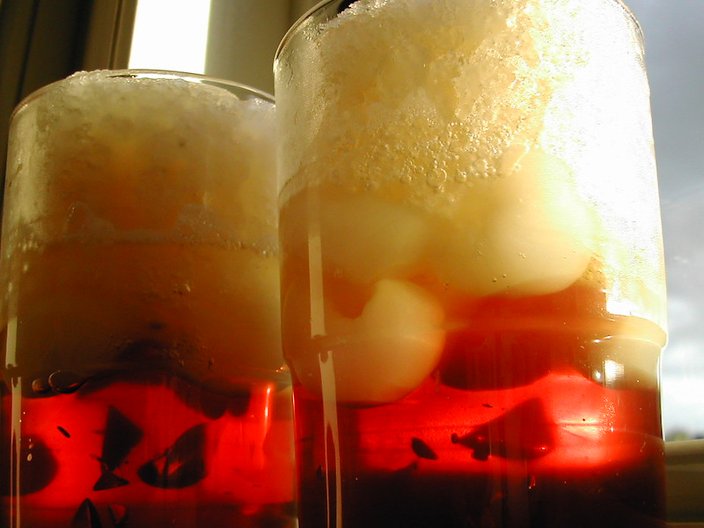
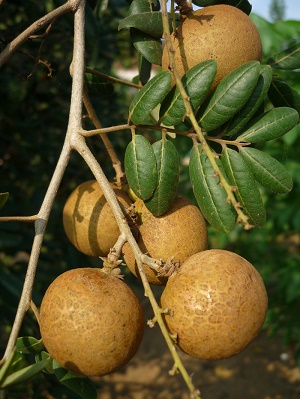 Fig. 1 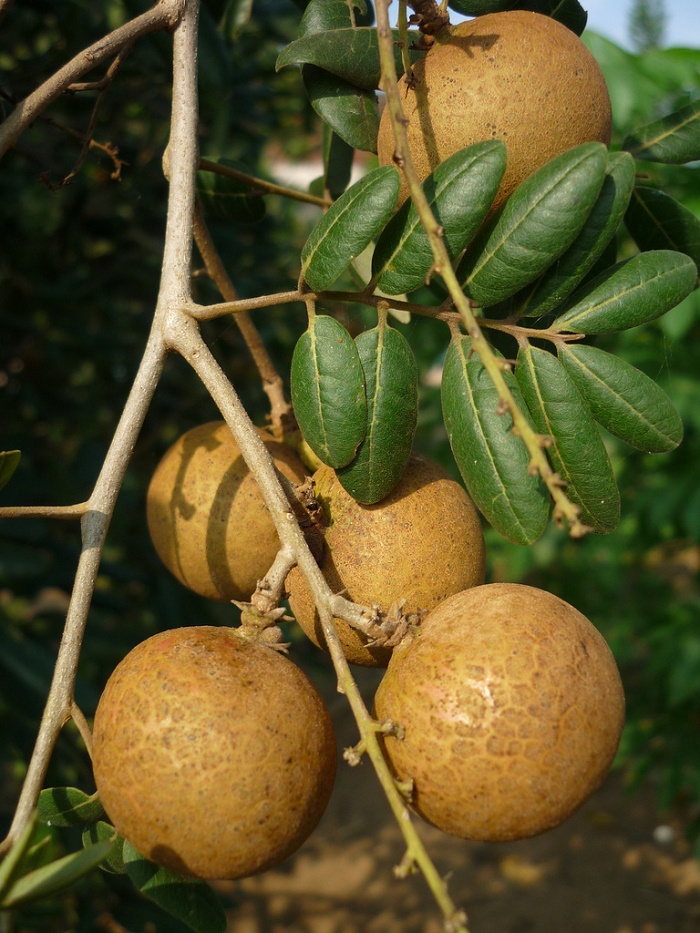 Dimocarpus longan, Sapindaceae 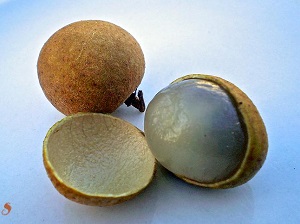 Fig. 2 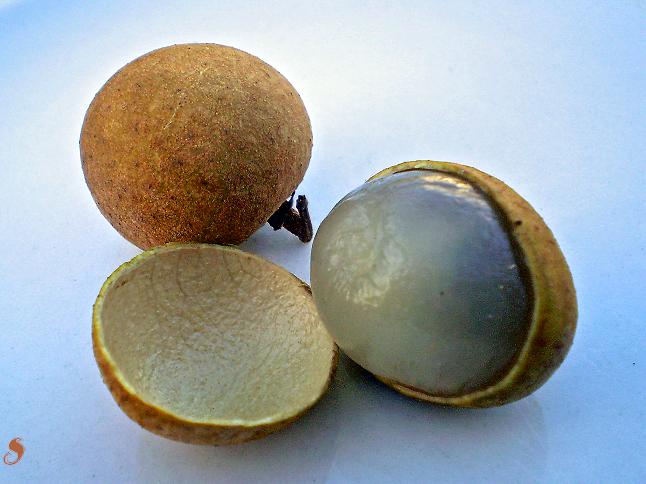 Longan fruit whole and showing the flesh 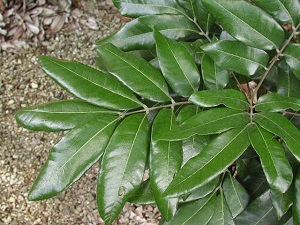 Fig. 3 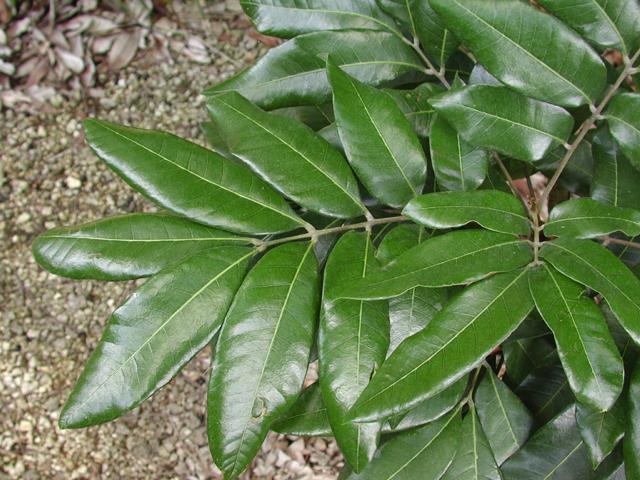 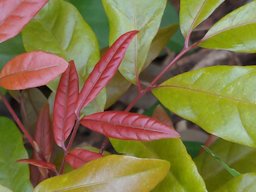 Fig. 4 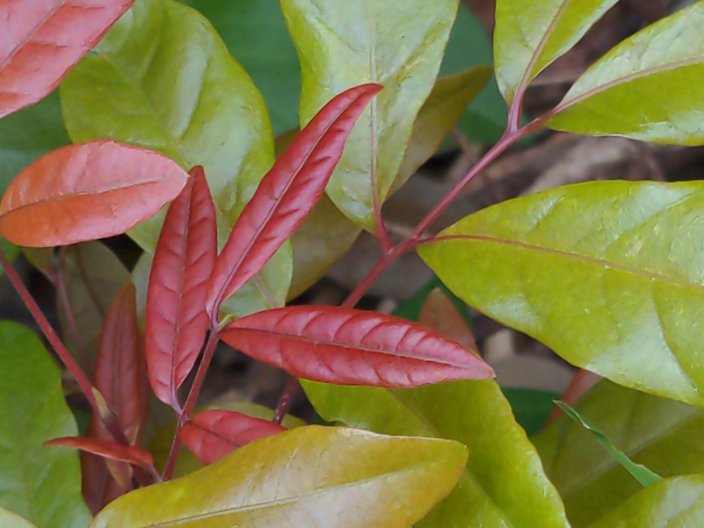 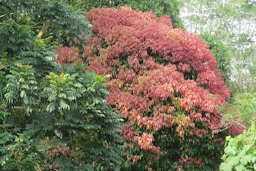 Fig. 5 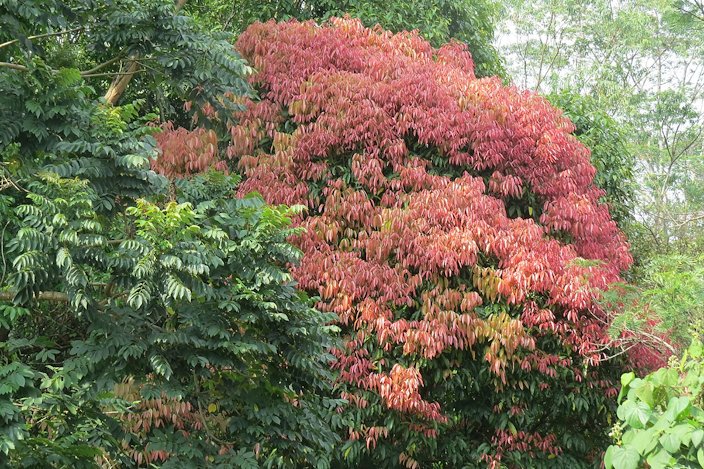 D. longan with fresh pinkish leaves 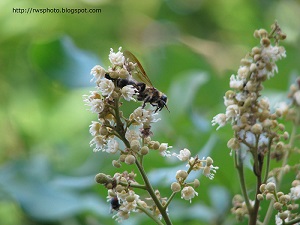 Fig. 9 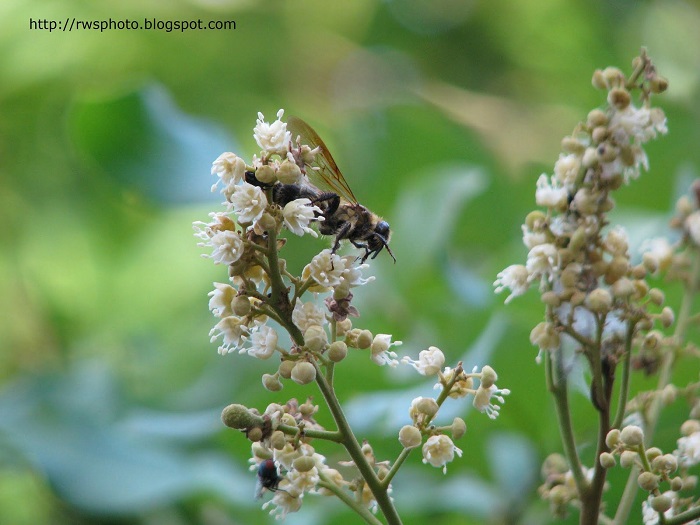 Paper Wasp foraging among the D. longan var. malesianus fruit flowers 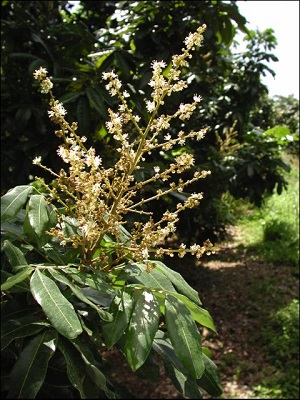 Fig. 10 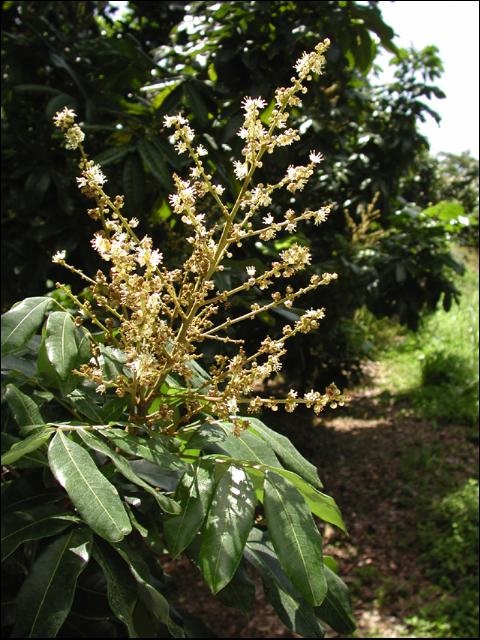 Inflorescense 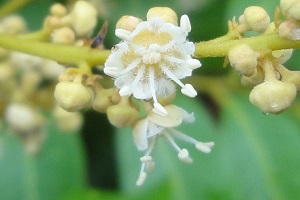 Fig. 11 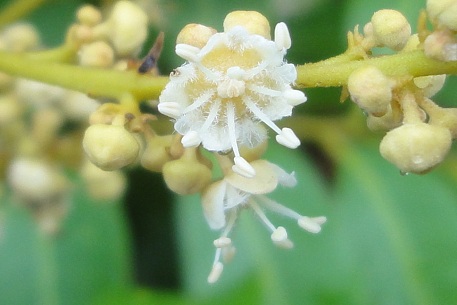 Flower close-up 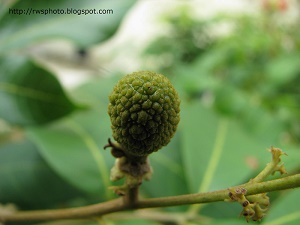 Fig. 16 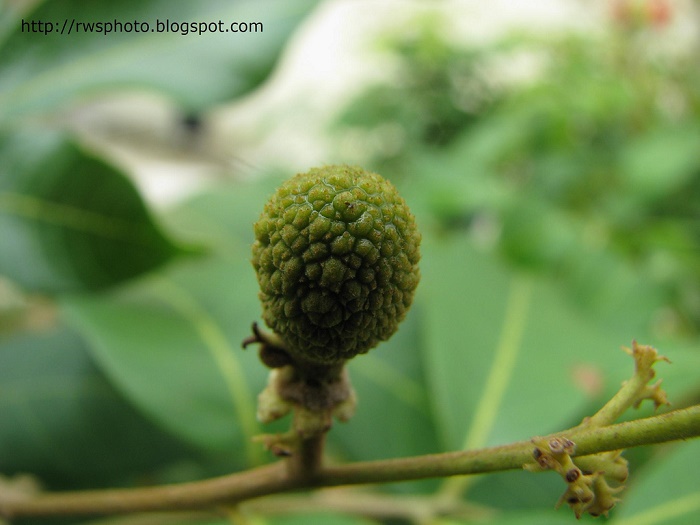 D. longan var. malesianus, macro shot of a tiny longan fruit bud  Fig. 17 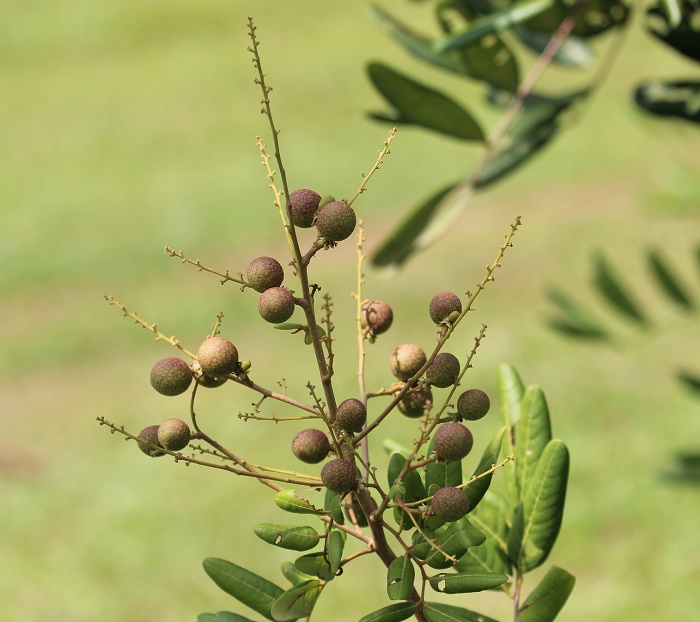 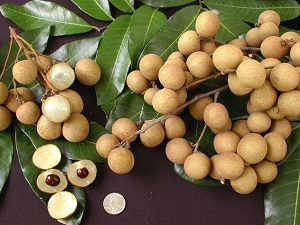 Fig. 18 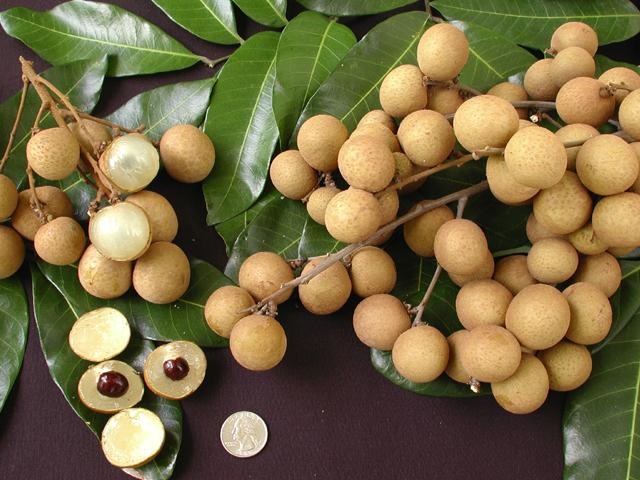 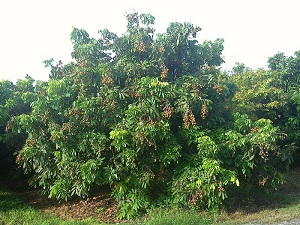 Fig. 25 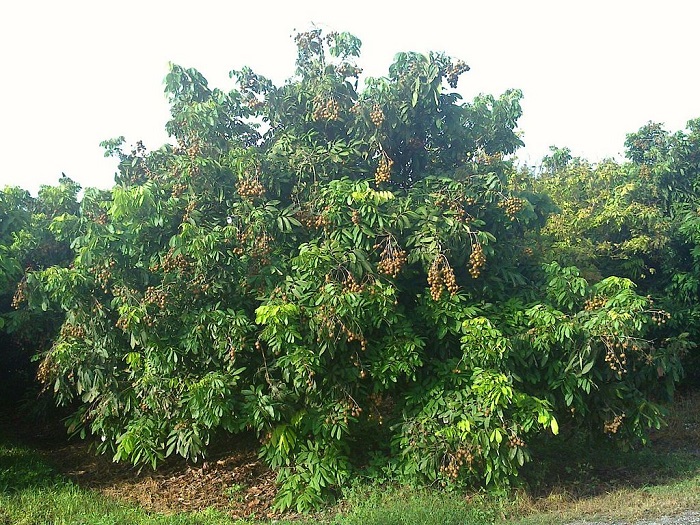 A broad, squat longan tree at Pine Island Nursery laden with fruit 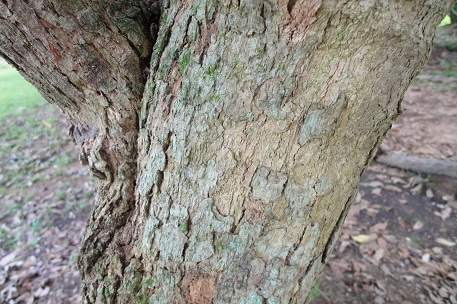 Fig. 30 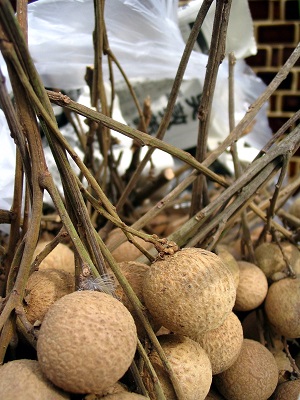 Fig. 34 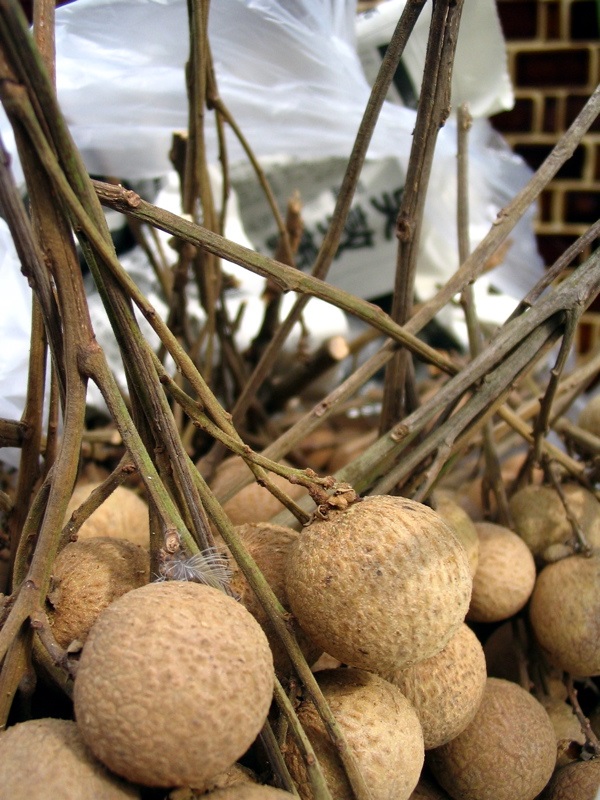  Fig. 35 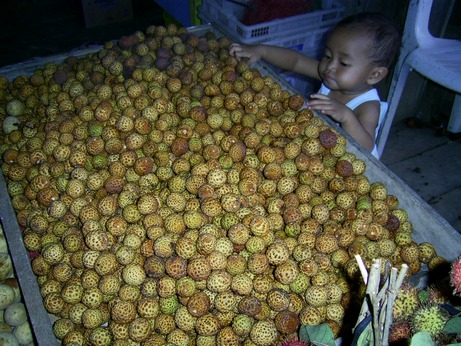 Fresh fruit market in Chinatown  Fig. 36 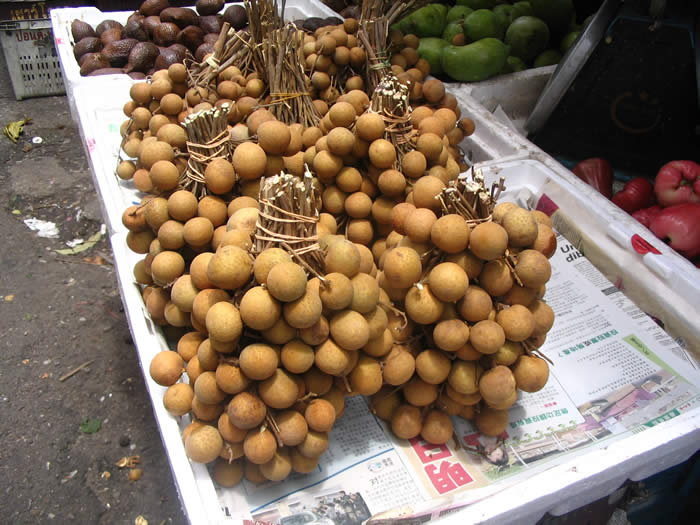 Fruit for sale in the market 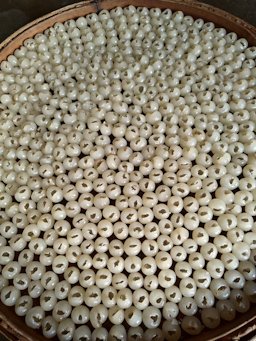 Fig. 37 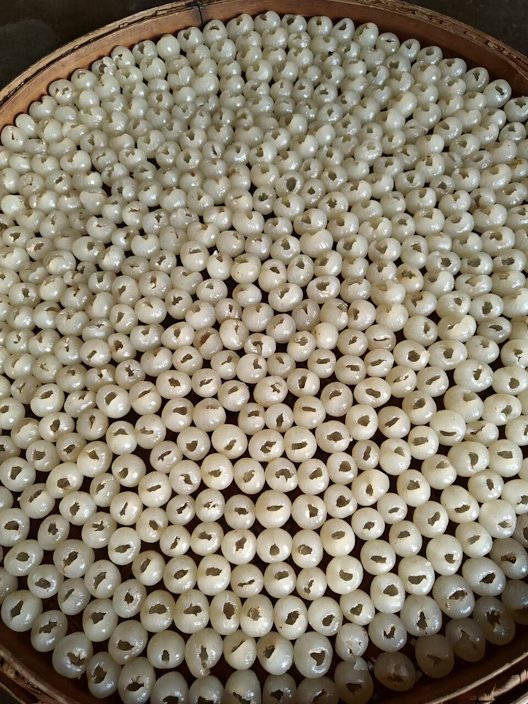 Pitted longan fruit pulp  Fig. 38 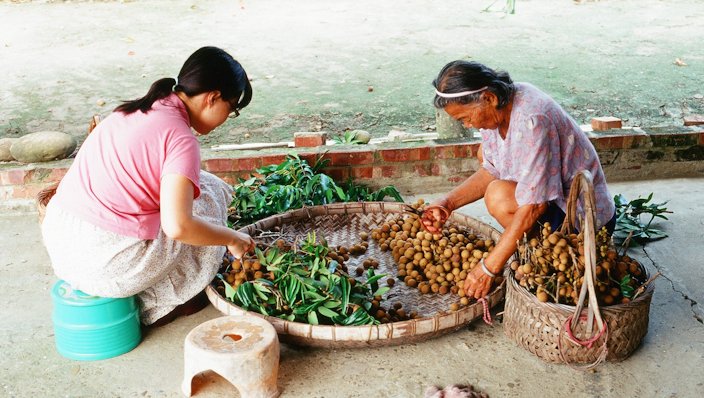 Longan in processing 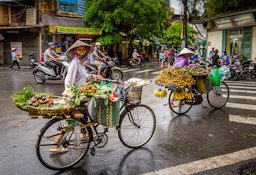 Fig. 39 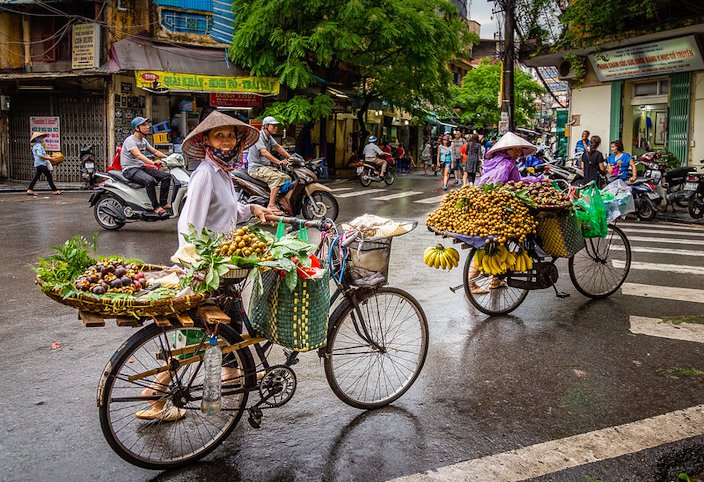 Mobile Fruiterers: ladies selling longans, bananas and mangosteen are a constant presence 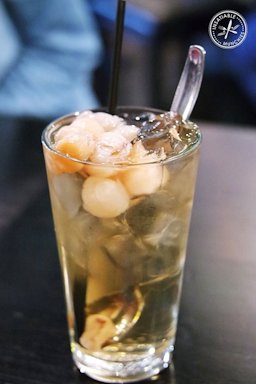 Fig. 40 Longan drink 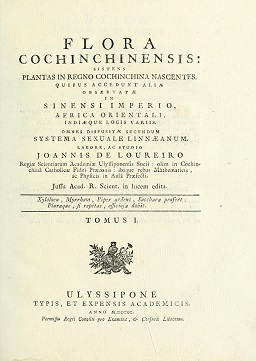 Fig. 47 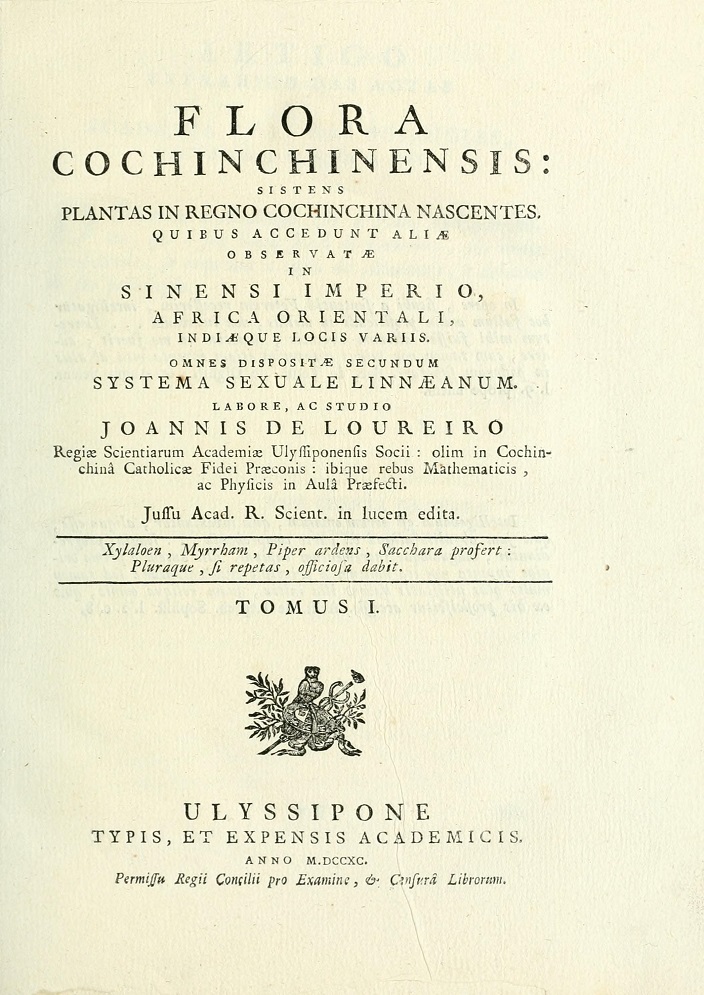 The longan was described in Joao de Loureiro's work, Flora Cochinchinensis, published in 1790 |
Scientific
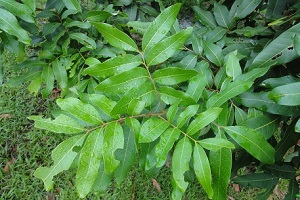
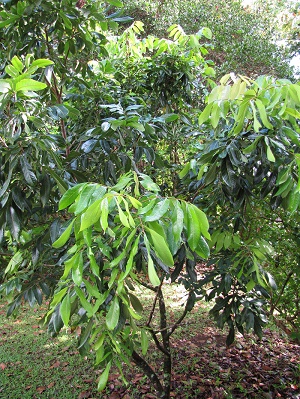
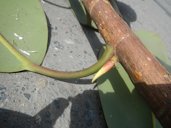
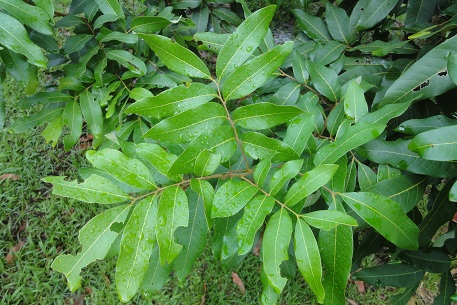
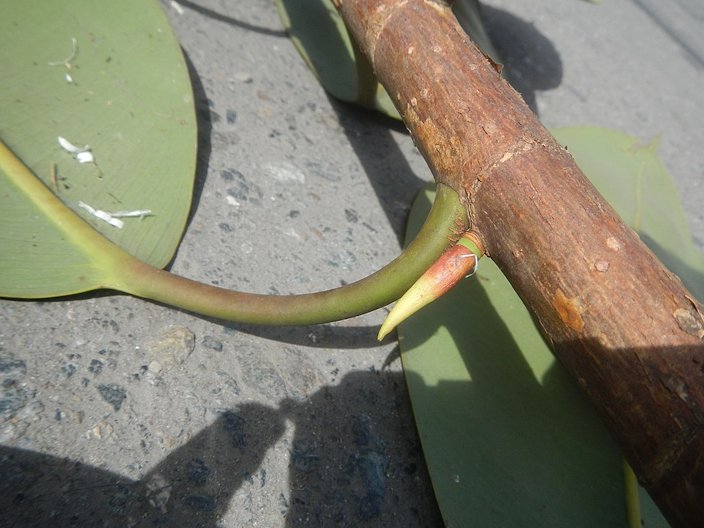
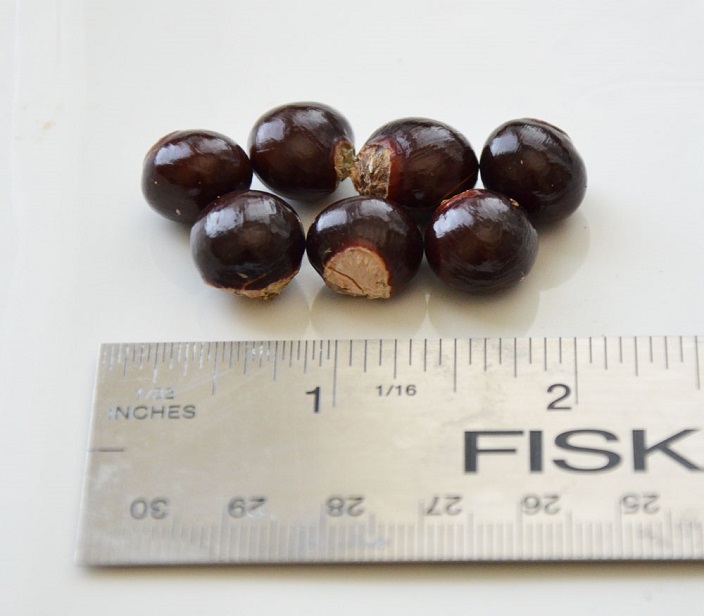
name Dimocarpus longan Lour. Common names English: longan, lungan, dragon eye; Spanish: longán, longana; French: longanier, oeil de dragon; Malaysian and Indonesian: leng keng; Thai: lam yai 1 Synonyms Euphoria longana, E. longan Steud., Nephelium longana, N. longan Lam. Relatives Lychee, Litchi chinensis; rambutan, Nephelium lappaceum; pulasan, N. mutabile; distant relative of akee, Blighia sapida; mamoncillo, Spanish lime, Melicocca bijuga 9 Family Sapindaceae (soapberry family) Origin Mayanmar (Burma), southern China, southwest India, Sri Lanka, Indochinese peninsula 1 USDA hardiness zones 10a-11b Uses Fruit; specimen or shade tree in the landscape Height 30-40 ft (9.1-12.2 m); may reach 100 ft (30 m) in native country 1 Spread 30-40 ft (9.1-12.1 m) Crown Tends to be round or oblong 1 Plant habit Evergreen; varied growth habits (spreading or erect) depending on the specific cultivar 12 Growth rate Slow Trunk/bark/branches Rough-barked trunk; thick and long, spreading, slightly drooping; heavily foliaged branches 14 Pruning requirement Required to improve tree structure and bearing surface area Leaves Pinnately compound alternate leaves; dark green, shiny, leathery; up to 12 in. (30 cm) long; wavy margins; blunt pointed tips; 6-9 pairs of leaflets per leaf 1 Flowers Terminal; erect; 4-18 in. (10–45 cm); widely branched (Fig. 7); Feb./March through April and the beginning of May 1 Fruit Globose drupe; 1/4-1 1/2 in. (22–36 mm); thin peel, leathery, lightly textured; aril fleshy, translucent; sweet, musky, mildly aromatic; one seed 9 Season June, July or August 1 USDA Nutrient Content: raw, dry pdf Light requirement Full sun Soil tolerances They do well on sandy loams, sand and calcareous, rocky soils of south Florida pH preference 5.5-7.0 Drought tolerance Tolerant Flood tolerance Not tolerant of excessively wet or flooded conditions 1 Soil/aerosol salt tolerance Not tolerant of saline wind or soil condition 1 Wind tolerance Wind resistant 1 Cold tolerance Young trees may be killed at 26-28 °F (-2-3 °C), mature trees tolerant, but branches are injured at 25-26°F (-3-4 °C) with very severe damage or death below 24°F (-4 °C) 1 Plant spacing 22-25 ft (6.7–7.6 m) 1 Invasive potential * None reported Pest/disease resistance Scales, lychee webworm Known hazard None Reading Material Longan Growing in the Florida Home Landscape, University of Florida pdf Longan, Fruits of Warm Climates The Longan, Manual Of Tropical And Subtropical Fruits Florida Growers Like Lychees and Longans, USDA Agriculture Research Service Dimocarpus longan, Agroforestree Database Dimocarpus longan is auspiciously named Longyan in China, due to its shiny, dark seed, resembling a dragon's eye. Importance In Florida, climatic requirements of longan are particularly suited to the southern part of the state, and new longan plantings have increased over the past ten years to reach approximately 1,600 acres with the prospects of further expansion. About 90 percent of the longan production in Florida is in Miami-Dade County with the remaining acreage scattered in various south Florida counties (Palm Beach, Lee, Sarasota, etc.). 12 Historically, longan was considered an unreliable bearer, and that limited expansion of the industry. However, with the discovery of the flower-inducing chemical potassium chlorate, growers can now improve flowering during the normal crop cycle (July–August) as well as produce off-season fruit; there is potential of year-round production. 12 How to Use Potassium Chlorate, TREC pdf Sample Productivity and Cost Estimates of Producing Longan (Dimocarpus longan Lour.) in South Florida, University of Florida pdf Origin The longan is native to southern China, in the provinces of Kwangtung, Kwangsi, Schezwan and Fukien, between elevations of 150-450 m. It thrives much better on higher ground than the lychee and endures more frost. It is rarely found growing along the dykes of streams as is the lychee but does especially well on high ground near ponds. The longan appears in these regions more often but it, too, cannot stand heavy frosts. After a long period of cool weather over the 3 winter months, with no frost, longan trees bloom well. Blooming is poor after a warm winter. 14 In 1954, rare-fruit pioneer William Whitman introduced the superior 'Kohala' cultivar from Hawai'i. 9 Sapindaceous Fruits and Nuts, West Australian Nut and Tree Crop Association Description The longan is a large evergreen tree that is becoming very popular in South Florida landscapes. Native to southeast Asia, this beautiful tree produces showy clusters of grape-like fruit during the mid-to-late summer. Trees can grow as high as forty feet or more and are well-adapted for a wide variety of soil and moisture conditions. 3 Leaves Leaves evergreen, leathery, wavy, glossy-green on the upper surface, minutely hairy and greyish-green beneath. New growth is wine-colored and showy (Fig. 4,5). 14
Fig. 7. D. longan (Longan, dragon's eye) habit at Garden of Eden Keanae, Maui, Hawai'i Flowers The inflorescence is commonly called a panicle. Flowers on the panicle are held on numerous cymules on the many branchlets of the panicle. The flowers are small and have 5 to 6 sepals and petals, and are brownish yellow or greenish yellow, with a two-lobed pistil and usually 8 stamens. Panicles may carry a few to more than 350 fruit. There are 3 flower types in longan, staminate (functionally male), pistillate (functionally female) and hermaphroditic (bisexual). Flowering in each panicle occurs in progressive openings of staminate (male) flowers first, then hermaphroditic flowers functioning as females and then hermaphroditic flowers functioning as males. 1 Longan flowers are of the best food source for honey, so that honey production is related to longan-growing areas in China, Thailand and Taiwan. 10
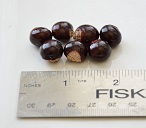
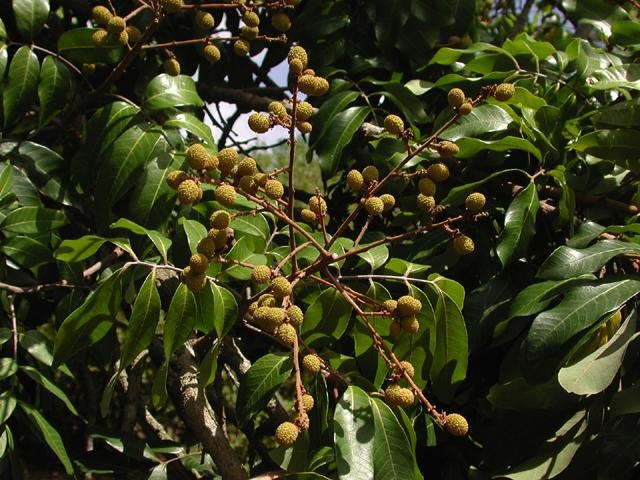
Pollination Bees (Apis and Mellifera spp.) are the major pollinators and comprised 98-99% of the total insect visitors to the flowers. The visits occur mostly during the morning hours, when nectar secretion occurs. Too much rain during anthesis can reduce flower opening and the insect activity needed for pollination. Irrigation after a period of soil water stress is reported to aid in flowering, even though the tree flowers profusely in areas with high water tables. 11 Fruit The drupaceous fruit are spherical to ovoid, 3/4 to 1 7/16 inches (22–36 mm) in diameter and 0.21 to 0.67 oz (6–19 g) in weight. The peel is tan or light brown, thin, leathery and smoother than that of the lychee. The pulp is whitish and translucent; thin in large seeded fruits and medium thick to thick in others. Fruit have 1 seed; globular and shiny, brown to dark brown. The pulp does not adhere to the seed and is flavorful and sweet with 12-21% soluble solids. 1
Fig. 20. D. longan, Shanwei, Guangdong Province, China Fig. 23. D. longan, Utan Paradise Jungle Camp, Crocker Range National Park, Sabah, Borneo Varieties Page Reliable bearing is the major production problem for longan throughout the world. In Florida, 99% of the acreage is planted with 'Kohala'. Other cultivars have been introduced, some for a long time and others recently. A number of new and re-introductions including 'Edau' ('Daw'), 'Chompoo', 'Haew', and 'Biew Kiew' are evaluation by several institutions and producers. However, nothing superior to 'Kohala' has been identified. 1 One of the recently introduced cultivars is named 'Diamond River'. This cultivar is from Thailand and is reported to fruit every year, be precocious, produce off-season, and produce a sizeable late season crop. However, fruit quality is only fair and the tree is very susceptible to limb breakage. 1
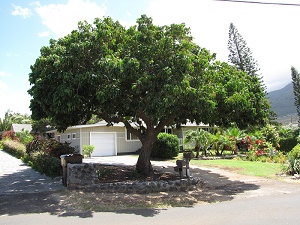
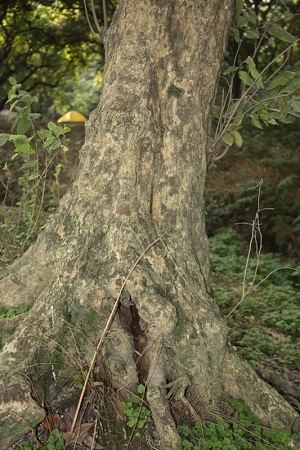
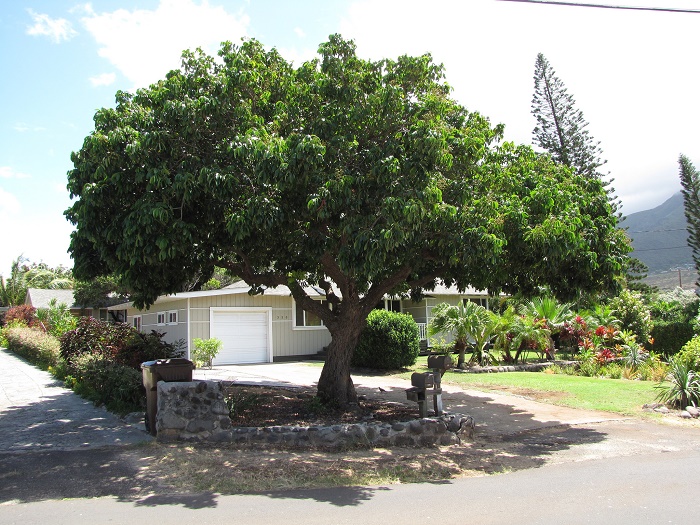
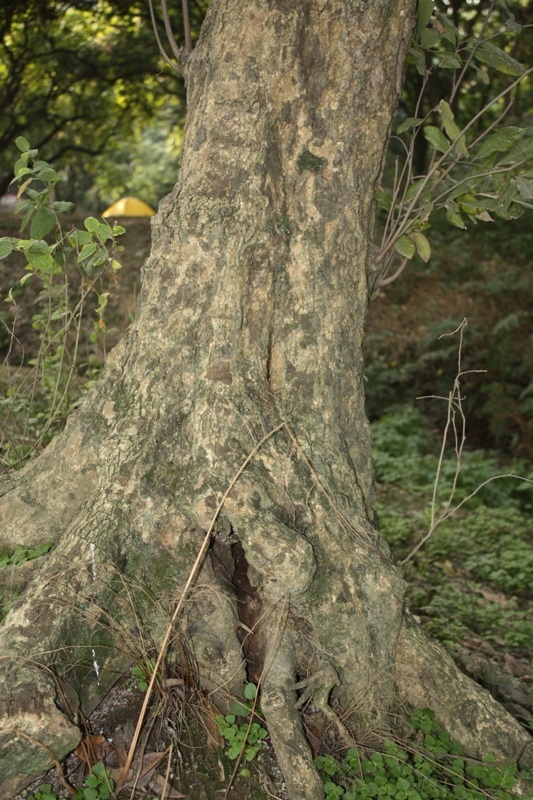
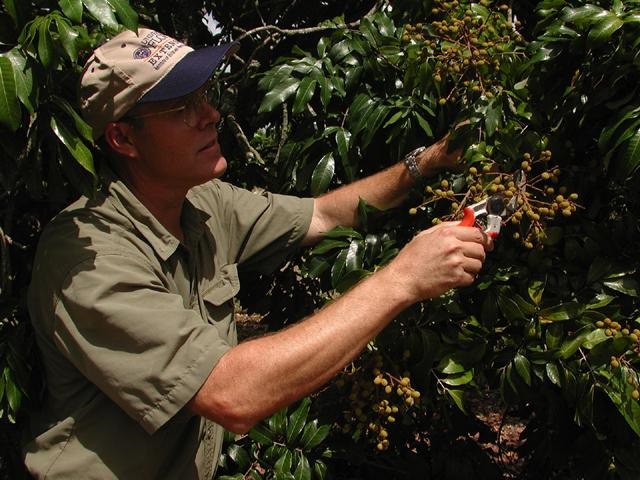
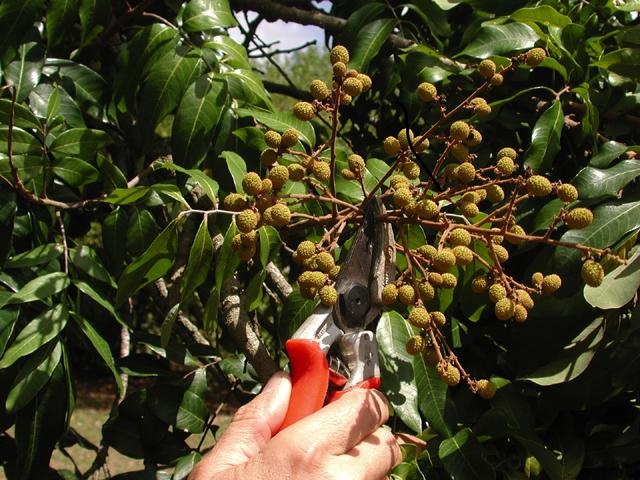
Fig. 26. Young tree Fig. 27. Longan 'Kohala' Fig. 28. D. longan (Longan, dragon's eye) habit at Wailuku, Maui, Hawai'i Fig. 29. Base of an old tree Thinning Longan fruit set varies greatly among trees and years. In some years, individual longan panicles set in excess of 300 fruit. However, panicles with 150 or more fruit usually produce small fruit. Removing about 50% of the set fruit during the spring usually results in a large increase in fruit size. Thinning is best done when fruit are 1/4 to 1/2 inches (6-12 mm) in diameter and consists of removing one half to two-thirds of the distal (terminal) end of each panicle. 1
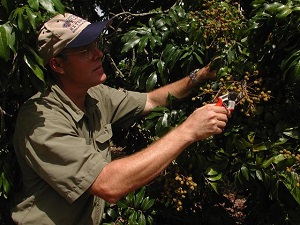
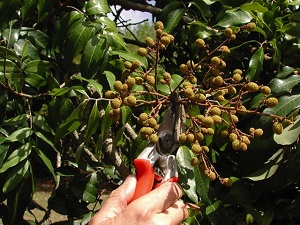
Fig. 31. Dr. Crane, University of Florida TREC, thinning a panicle Fig. 32. Placement of the thinning cut Fig. 33. Results of thinning
Harvesting The longan harvest season in south Florida is from the middle of July to early September but is mainly in August. At maturity, the fruit will be an intense tan color. The main ripeness indicator is pulp sweetness; this occurs before removing the fruit from the tree. Fruit that is 1¼ inches (32 mm) or greater in diameter with good flavor is most desirable. Once removed from the tree, the fruit will not increase in sweetness. 1 Time flowering to harvest: 140-190 days. 1 Longan: Postharvest Quality-maintenance Guidelines, University of Hawai'i at Mānoa pdf Propagation Trees can be seed-propagated, but seedlings do not come true to type and may take up to six to eight years to start bearing. A more practical way of propagation is by air layering, which takes about eight to ten weeks, or veneer grafting on seedling rootstocks. Air-layered trees generally will bear within one to two years after being planted and grafted trees may bear the next year after being planted. April through August is the best time to perform this task, and roots begin to form within 10 - 12 weeks. No special or improved rootstocks have been reported. 3,8 Types of Propagation, Edible South Florida Pruning At planting or soon afterward, remove limbs with a narrow crotch angle. To force new shoot growth and increase the number of new shoots either bend long upright limbs to a horizontal position by tying or head back upright limbs. Shoot tip removal (removing 1-2 inches of the end of new shoots), once or twice during spring and summer will increase branching and make the tree more compact. As trees mature, most of the pruning is done to control tree size (height and width), and to maintain production of the lower tree canopy and light on all sides of the canopy. If the canopy of the tree becomes too dense, selective removal of some branches will increase air circulation and light penetration. 1 Trees kept 10 to 15 ft high (3.1–4.6 m) and 15 to 30 ft (4.6–9.1 m) wide are easier to care for and pick. They are also less likely to topple during strong winds. If the canopy of the tree becomes too dense, selective removal of some branches will increase air circulation and light penetration. 1 Fertilizing See Longan Growing in the Florida Home Landscape, University of Florida pdf Irrigation Withholding or reducing watering during the late summer/early fall through winter is recommended to stop or reduce excessive vegetative growth and enhance subsequent flowering during the spring. However, for optimum fruit production and quality, regular irrigation is recommended from flowering through harvest. 1
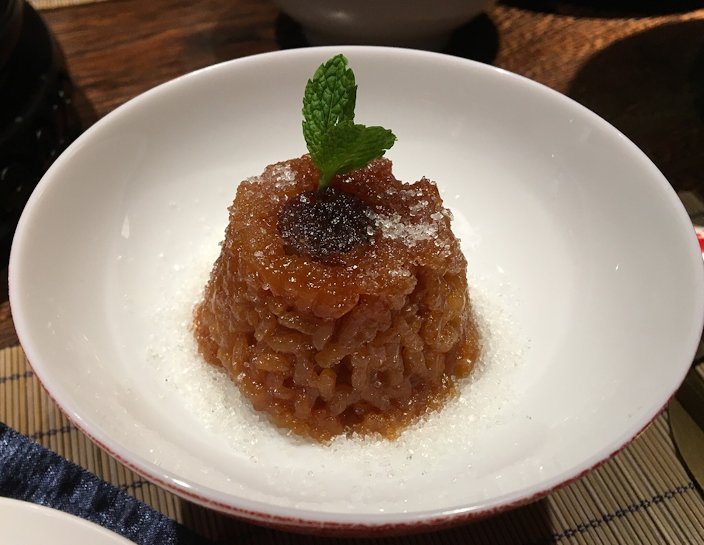
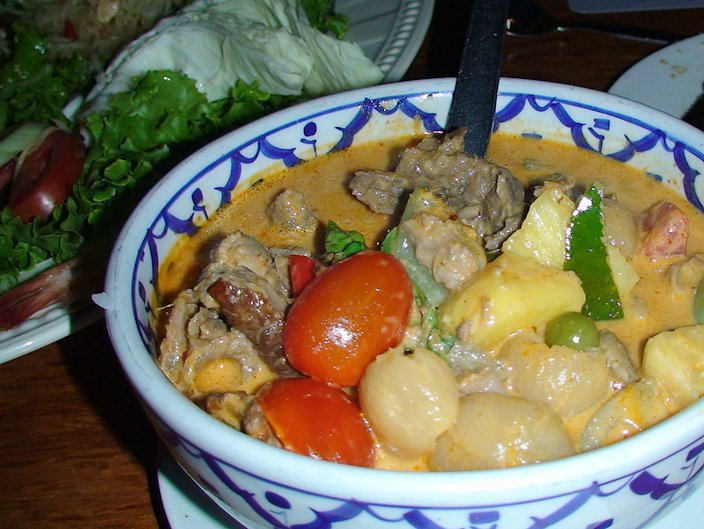
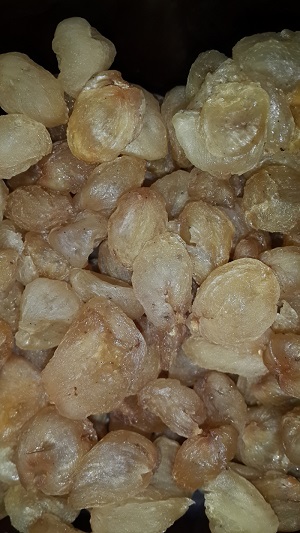
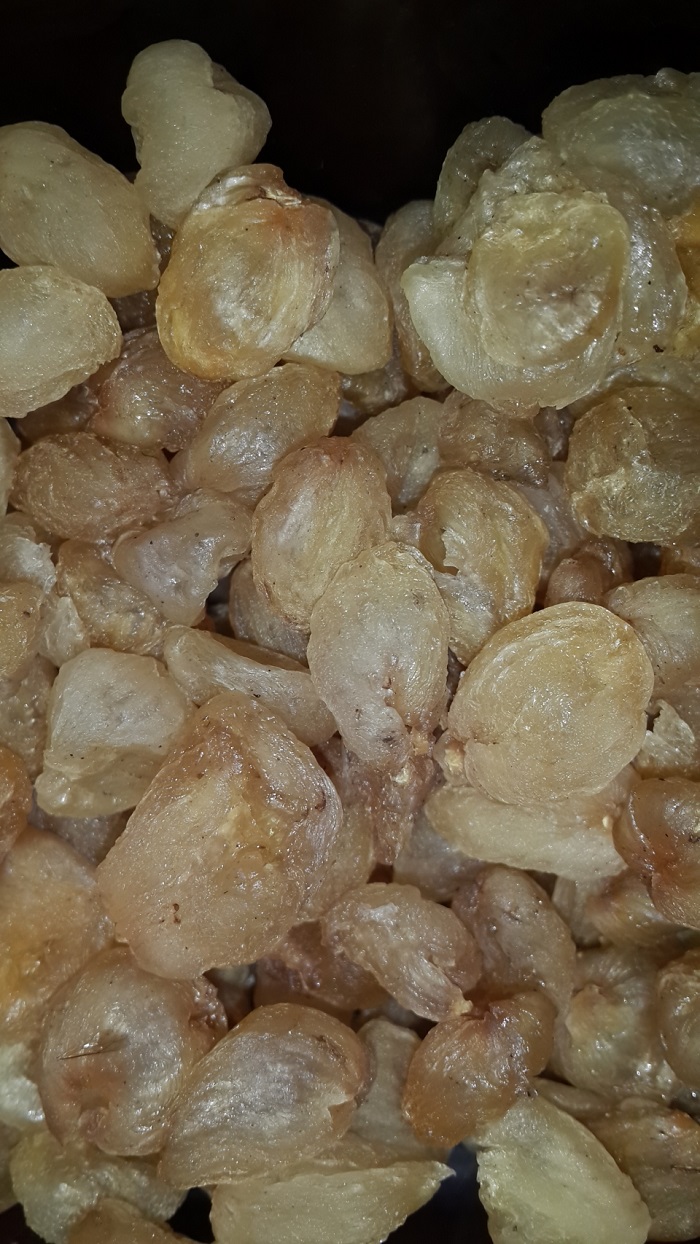
Pest Page Longans have a few insect problems in south Florida. The most common pests are the lychee webworm and several scale insects. 1 Disease Page There are no major disease problems of longan at the present time. Red alga (Cephaleuros virescens) attacks limbs and shoots and is most prevalent during high humidity, warm, rainy weather. Parasitic lichen (Strigula sp.) may parasitize leaves. Please contact your local UF/IFAS Extension office for current control recommendations. 1 Food Uses Ripe fruits, which have a sweet but less aromatic taste than the related lychee (Litchi chinensis), are predominantly consumed fresh. The translucent flesh is used in fruit salads and desserts as well as in savory recipes like sweet- and-sour dishes and stir-fries. Fruits are preserved by canning in syrup or drying. Dried fruits, which have a leathery texture and turn blackish, are used to make refreshing drinks and aromatized teas. The seeded fruits are macerated in alcohol to produce a type of liqueur. 15
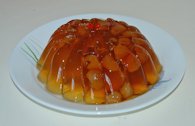
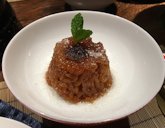
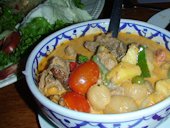
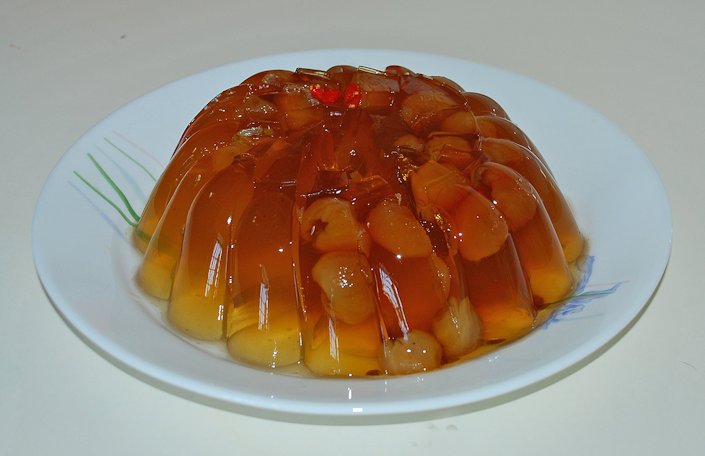
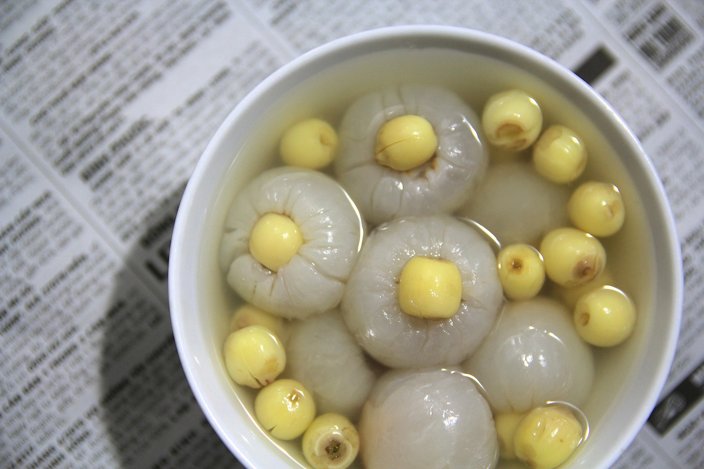
Fig. 41. Longan jelly Fig. 42. Longan Shao Bai, a variety of sweet Shao Bai Fig. 43. Red duck curry With longan Fig. 44. Vietnamese longan porridge with lotus seeds Fig. 45. Longans sandwiched between lingonberry jelly and green tea granita Fig. 46. Dried longan for homemade Chinese soup Longan and Steak Salad, Taste Florida's Tropics Florida Food Fare: Longans, University of Florida pdf (archived) Medicinal Properties ** The flesh of the fruit is administered as a stomachic, febrifuge and vermifuge, and is regarded as an antidote for poison. A decoction of the dried flesh is taken as a tonic and treatment for insomnia and neurasthenic neurosis. In both North and South Vietnam, the "eye" of the longan seed is pressed against a snakebite in the belief that it will absorb the venom. 2 Other Uses The seeds, because of their saponin content, are used like soapberries (Sapindus saponaria L.) for shampooing the hair. The seeds and the rind are burned for fuel and are part of the payment of the Chinese women who attend to the drying operation. 2 General Fusing the Ancient With the Modern "Longan trees growing near temples in that country (Taiwan)," says Matsumoto, "were found to form flowers and then bear fruit shortly after religious ceremonies in which fireworks were used. This occurred even outside the typical growing season." Studies reported in 2000 by Chung-Ruey Yen of the National Pingtung University of Science and Technology in Taiwan suggested that a chemical in the ashes of the firecrackers settled in soil around the trees and triggered flowering. 7 Further Reading Crop Profile for Lychee and Longan in Florida, University of Florida pdf Longan Production in Asia, Food and Agriculture Orgainzation of the United Nations pdf Longan, Archives of the Rare Fruit Council of Australia, 1980 Longan, Archives of the Rare Fruit Council of Australia, 1995 New Options for Lychees and Longans Fans and Farmers, USDA Agriculture Research Service Longan Botanical Art List of Growers and Vendors |
||||||||||||||||||||||||||||||||||||||||||||||||||||||||||||||
| Bibliography 1 Crane, Jonathan H., et al. "Longan Growing in the Florida Landscape." Horticultural Sciences Dept., UF/IFAS Extension, HS-49, Original Pub. Nov. 1978, Revised Apr. 1994, Nov. 2000, Sept. 2005, Oct. 2008, and Nov. 2016, Reviewed Dec. 2019, FC49, Released 7 Jan. 2020, Reviewed 24 July 2023, AskIFAS, edis.ifas.ufl.edu/MG049. Accessed 8 Jan. 2017, 9 May 2020, 4 July 2025. 2 Fruits of Warm Climates. Julia F. Morton, Miami, 1987. 3 Joyner, Gene. "Longan." Archives of the Rare Fruit Council of Australia, Tropical Fruit News Vol. 28 No. 10. May 1995, rfcarchives.org.au. Accessed 17 Mar. 2015. 4 "Longan." Gardening Solutions, UF/IFAS Extension, Ask IFAS, gardeningsolutions.ifas.ufl.edu/plants/edibles/fruits/longan/. Accessed 21 Mar. 2015. 5 Barwick, Margaret. Tropical & Subtropical Trees. A Worldwide Encyclopaedic Guide. London, 2004. 7 Wood, Marcia. "New Options for Lychee and Longan Fans and Farmers." USDA, ARS, National Genetic Resources Program. Germplasm Resources Information Network (GRIN), National Germplasm Resources Laboratory, Beltsville, Maryland, May 2004, ars.usda.gov. Accessed 22 Mar. 2015. 8 Mossler, Mark, and O. Norman Nesheim. "Florida Crop/Pest Management Profile: Lychee and Longan." Horticultural Sciences Dept., UF/IFAS Extension, CIR1400, PI050, Pub. date Mar. 2002, Revised June 2009, Reviewed June 2012, Historical Fact Sheets, vol. 2009, no. 5, doi.org/10.32473/edis-pi050-2009, AskIFAS, journals.flvc.org/edis/article/view/117985. Accessed 23 Mar. 2015, 4 july 2025. 9 Boning, Charles R. Florida's Best Fruiting Plants- Native and Exotic Trees, Shrubs, and Vines. Sarasota, Pineapple Press, 2006. 10 The Encyclopedia of Fruit & Nuts. Edited by Jules Janick, and Robert E. Paull, Cambridge, CABI, 2008. 11 Paull, Robert E. and Odilo Duarte. Tropical Fruits, Volume I. 2nd ed., Cambridge, CABI, 2011. 12 Ballen, Fredy H., et al. "Sample Profitability and Cost Estimates of Producing Longan (Dimocarpus longan Lour.) in South Florida." Food and Resource Economics Dept., UF/IFAS Extension, FE1049, DOI: 10.32473/edis-fe1049-2019, Pub.date Jan. 2019, Reviewed 4 Jan. 2022, Critical Issue: 1. Agricultural and Horticultural Enterprises, AskIFAS, edis.ifas.ufl.edu/publication/FE1049. Accessed 4 July 2025. 13 Crane, J. H. "How to Use Potassium Chlorate." Tropical Fruit Management Program, 2010, hos.ifas.ufl.edu/media/hosifasufledu/documents/pdf/in-service-training/shared-related-publications/How-to-use-potassium-chlorate.pdf. Accessed 4 July 2025. 14 Orwa, C., et al. "Dimocarpus longan Lour." Agroforestree Database: a tree reference and selection guide, version 4.0, 2009, Agroforestry, apps.worldagroforestry.org/treedb2/speciesprofile.php?Spid=17976. Accessed 5 July 2025. 15 Blancke, Rolf. Tropical Fruits and Other Edible Plants of the World: An Illustrated Guide. China, Comstock Publishing Associates, a division of Cornell University Press, 2016. Videos v1,v2,v3,v4,v5 Crane, Jonathan H., and Ian Maguire. "Cultural practices for the longan." UF/IFAS/TREC. Photographs Fig. 1 Duy Thuong Ngo 吳 惟 尚. "Lá và trái nhãn Xuồng. Quang thuộc họ Bồ Hòn Sapindaceae." Flickr, 2011, (CC BY-NC 2.0), www.flickr.com. Accessed 10 Jan. 2017. Fig. 2 Surukuku (Nelson Ramos-Lopes). "Fruta LONGAN (Dimocarpus longan Lour.)" Wikimedia Commons, 27 July 2007, Public Domain, GFDL, commons.wikimedia.org/wiki/File:Frutos_Exóticos-LonganFruit-002.JPG. Accessed 20 Mar. 2015. Fig. 3 Geiwsizo, CHAIUyanmt. "Dimocarpus longan, The Avenue Rooftop Garden terrace." Wikimedia Commons, 9 Mar. 2022, (CC BY-NC-SA 4.0), commons.wikimedia.org/wiki/File:HK_WC_灣仔_Wan_Chai_囍匯_The_Avenue_Rooftop_Garden_terrace_green_leave_flora_March_2022_Px3_39.jpg. Accessed 6 July 2025. Fig. 4 sow-cy-wlm. "Dimocarpus longan, Taiwan." iNaturalist, Research grade, 12 Feb. 2022, (CC BY-NC 4.0), www.inaturalist.org/observations/107018682. Accessed 7 July 2025. Fig. 5 Johnsingh, A. J.T. "Dimocarpus longan with fresh pinkish leaves." Wikimedia Commons, 2 Mar. 2015, (CC BY-NC-SA 4.0), commons.wikimedia.org/wiki/File:Dimocarpus_longan_AJTJ.jpg. Accessed 6 July 2025. Fig. 6,11,15,19 Kwan. "Dimocarpus longan spp., longan." The Plant Observatory, 2011, naturelovesyou.sg. Accessed 17 Mar. 2015. Fig. 7 Starr, Forest, and Kim Starr. "Dimocarpus longan (Longan, dragon's eye) Habit at Garden of Eden Keanae, Maui, Hawai'i." Starr Environmental, 2011, (CC BY 4.0), starrenvironmental.com. Accessed 10 Jan. 2017. Fig. 8 Judgefloro. "Balete Malunggay Longan leaves Common houseflies." Wikimedia Commons, 25 Oct. 2020, Public Domain, commons.wikimedia.org/w/index.php?curid=95438445. Accessed 7 July 2025. Fig. 9 Sinyem, Richard Wellis. "Paper Wasp foraging among the Dimocarpus longan malesianus fruit flowers." Flickr, rwsphoto.blogspot.com, 2010, (CC BY-NC 2.0), www.flickr.com. Accessed 8 Jan. 2017. Fig. 10,18,21,27,31,32,33 Maguire, Ian. "Kohala longan." University of Florida, Ask IFAS, edis.ifas.ufl.edu. Accessed 23 Jan. 2014. Fig. 12 jobwang. "Dimocarpus longan." iNaturalist, Research grade, 5 Apr. 2025,(CC BY-NC 4.0), www.inaturalist.org/observations/269427866. Accessed 6 July 2025. Fig. 13 PQ77wd. "Dimocarpus longan." Wikimedia Commons, 5 Apr. 2015,(CC BY-NC-SA 4.0), commons.wikimedia.org/wiki/File:Flowers_for_longan.jpg. Accessed 6 July 2025. Fig. 14 Starr, Forest, and Kim Starr. "Dimocarpus longan (Longan, dragon's eye), Enchanting Floral Gardens of Kula, Maui, Hawai'i." Starr Environmental, 2009, (CC BY-NC 2.0), starrenvironmental.com. Accessed 10 Jan. 2017. Fig. 16 Sinyem, Richard Wellis. "Dimocarpus longan var. malesianus. Macro shot of a tiny Longan fruit bud." Flickr, 22 Mar. 2010, rwsphoto.blogspot.com. (CC BY-NC 2.0), www.flickr.com/photos/rwsphoto/4454522004/ Accessed 8 Jan. 2017. Fig. 17 Cerlin Ng. "Dimocarpus longan." Flickr, 2013, (CC BY-NC-SA 2.0), www.flickr.com. Accessed 8 Jan. 2017. Fig. 20 MikeVA. "Dimocarpus longan, Shanwei, Guangdong Province, China." iNaturalist, Research grade, 29 June 2024, (CC BY-NC 4.0), www.inaturalist.org/observations/225871361. Accessed 6 July 2025. Fig. 22 Surukuku (Nelson Ramos-Lopes). "Fruta LONGAN (Dimocarpus longan Lour.)" Wikimedia Commons, 27 July 2007, Public Domain, GFDL, commons.wikimedia.org/wiki/File:Frutos_Exóticos-LONGAN.jpg. Accessed 20 Mar. 2015. Fig. 23 Yakovlev, Alexey. "Dimocarpus longan, Utan Paradise Jungle Camp, Crocker Range National Park, Sabah, Borneo." Flickr, 16 Mar. 2023,(CC BY-SA 2.0), www.flickr.com/photos/botalex/52752045025/. Accessed 8 July 2025. Fig. 24 "Longan." Plant Informational Database, trade winds fruit, www.tradewindsfruit.com/content/longan.htm. Accessed 1 July 2019. Fig. 25 Pouletic. "A broad, squat Longan tree at Pine Island Nursery laden with fruit." Wikimedia Commons, 2011, (CC BY-SA 3.0), commons.wikimedia.org. Accessed 20 Mar. 2015. Fig. 25 "Longan, Dragon's Eye." Top Tropical Plant Catalog, toptropicals.com. Accessed 23 Jan. 2014. Fig. 28 Starr, Forest, and Kim Starr. "Dimocarpus longan (Longan, dragon's eye) Habit at Wailuku, Maui, Hawai'i." Starr Environmental, 2009, (CC BY-NC 2.0), starrenvironmental.com. Accessed 10 Jan. 2017. Fig. 29 Jimmie. "Base of an old tree." Useful Tropical Plant Database, (CC BY-NC 2.0), tropical.theferns.info/viewtropical.php?id=Dimocarpus+longan. Accessed 10 Jan. 2017. Fig. 30 yun0414. "Longan Dimocarpus longan." iNaturalist, Research grade, Jan. 2025, (CC BY-NC 4.0), www.inaturalist.org/observations/257067230. Accessed 6 July 2025. Fig. 34 Van der Giessen, Elijah. "Dimocarpus longan, from Edmonton, Canada." Wikimedia Commons, via Flickr, 24 Aug. 2004, flickr.com. (CC BY-NC 2.0), commons.wikimedia.org/wiki/File:Lychee_bounty.jpg. Accessed 21 Mar. 2015. Fig. 32 Lee, Michele. "Fresh fruit market in Chinatown." Flickr, 11 May 2020, (CC BY-NC-ND 2.0), www.flickr.com/photos/photos/michellerlee/4597831744/. Accessed 20 Mar. 2015. Fig. 36 Patrice 78500. "Fruits for sale in the market." Useful Tropical Plant Database, (CC BY-NC 2.0), tropical.theferns.info/image.php?id=Dimocarpus+longan. Accessed 21 Mar. 2015. Fig. 37 Sagisavas, Fumikas. "Pitted longan fruit pulp." Wikimedia Commons, 15 July 2024, Public Domain, commons.wikimedia.org/wiki/File:Pitted_longan_fruit_pulp.jpg. Accessed 7 July 2025. Fig. 38 Wunkai. "Longan in processing." Flickr, 18 Aug. 2020, (CC BY-SA 2.0), Image cropped, flickr.com/photos/wunkaiwang/4904088807/. Accessed 9 July 2025. Fig. 39 Norton, Phil. "Mobile Fruiterers: Mobile Fruiterers: ladies selling Longans, Bananas and Mangosteen et al, are a constant presence." Flickr, 11 Aug. 2017, (CC BY-NC-ND 2.0), www.flickr.com/photos/nortonp/36361024771/. Accessed 9 July 2025. Fig. 40 insatiablemunch. "Longan drink." Flickr, 15 Aug. 2014, (CC BY 2.0), www.flickr.com/photos/48041244@N05/14738989110. Accessed 6 July 2025. Fig. 41 Yut Shing, Choo. "Longan Jelly." Flickr, 10 Aug. 2010, (CC BY-NC-SA 2.0), Image cropped, www.flickr.com/photos/25802865@N08/4877589794/. Accessed 6 July 2025. Fig. 42 Zhou, Zheng. "Longan Shao Bai, a variety of sweet Shao Bai." Wikimedia Commons, 25 Dec. 2019, (CC BY-NC-SA 4.0), Image cropped, commons.wikimedia.org/wiki/File:Longan_Shao_Bai.jpg. Accessed 7 July 2025. Fig. 43 Hutchens, Jason. "Red Duck Curry With Longan." Flickr, 1 Nov. 2007, (CC BY 2.0), www.flickr.com/photos/36395862@N00/1814727180. Accessed 6 July 2025. Fig. 44 Thutruongvn. "Vietamese longan porrige with lotus seeds." Pixabay, Public Domain, pixabay.com/photos/vietnam-porridge-longan-lotus-seed-1315980/. Accessed 8 July 2025. Fig. 45 Loh, Dawn. "RLongans sandwiched between lingonberry jelly and green tea granita." Flickr, 10 June 2025, (CC BY-NC-SA 2.0), www.flickr.com/photos/framboise/18578998/in/photostream/. Accessed 8 July 2025. Fig. 46 Lim, Phoebe. "Dried longans for homemade Chinese soup." Flickr, 25 Mar. 2013, (CC BY-SA 2.0), flickr.com/photos/phoebelimcl/8587430989/. Accessed 9 July 2025. Fig. 47 "The longan was described in Joao de Loureiro's work, Flora Cochinchinensis, published in 1790." Biodiversity Heritage Library, www.biodiversitylibrary.org/item/89540#page/9/mode/1up. Accessed 1 July 2019. * UF/IFAS Assessment of Non-native Plants in Florida's Natural Areas ** Information provided is not intended to be used as a guide for treatment of medical conditions. Published 12 Apr. 2014 LR. Last update 9 July 2025 LR |
|||||||||||||||||||||||||||||||||||||||||||||||||||||||||||||||