Article from Edible South Florida
Black Sapote: The Chocolate Pudding Fruit
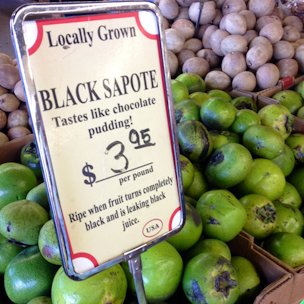
Black sapote, sold at Robert Is Here and
farmers markets during Dec.-March is green
and firm, but soft and oozy when ripe
One of South Florida’s more intriguing tropical fruits, the black sapote (Diospyros digyna)
– also known as the chocolate pudding fruit, chocolate persimmon or
sapote negro – is creamy and sweet when ripe, truly resembling dark
chocolate custard. Despite its common name, the black sapote is not
related to other sapotes like mamey. Instead, it belongs to the
persimmon family, Ebenaceae. You can spot the round, tomato-sized shiny
green fruits in farmers markets during the winter, but it’s not until
they’re wrinkled, soft and oozing black juice that they’re ready to eat.
Does
the black sapote really taste like chocolate? Chef Aaron Brooks of
Edge, Steak & Bar at the Four Seasons, thinks so. “The first time I
tried it, I immediately tasted mellow chocolate and subtle spice
notes,” he says. He used black sapote in a sauce for his fire-roasted
mojo chicken on grilled flatbread for the recent Dinner for Farmers at
Vizcaya Village. “The flavor reminded me of mole, so I thought why not
incorporate the fruit in the sauce?” He also used black sapote pulp in
a brioche dough: “It made the bread really moist and fluffy.”
You
can use black sapote in your favorite banana bread recipe to make a
moist quick bread. But you really don’t need to do anything much to
enjoy this custardy fruit. Scoop it into a bowl and top with a dollop
of whipped cream for a satisfying tropical dessert. Blend with lemon,
lime or orange juice for added tartness. Mix with milk and ground
nutmeg for a smoothie. Combine milk, sapote and cinnamon and freeze in
an ice-cream machine. Black sapote is a good source of vitamin C,
calcium and phosphorous.
Black sapote trees are medium-sized –
usually 25 to 30 feet – and grow well in well-drained, sunny locations.
Harvest fruits when they change from shiny green to dull green, then
wait 3 to 14 days until they soften. Freeze pulp for later use. Find
out more about growing black sapote here.
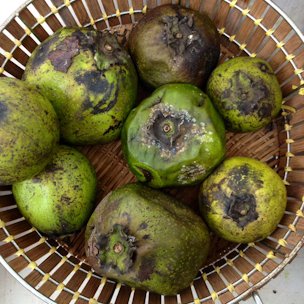
Ripe black sapotes are soft and wrinkly.
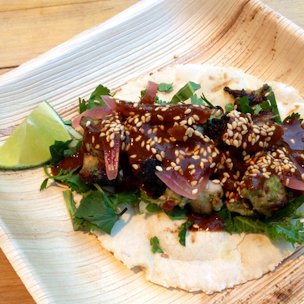
Chef Aaron Brooks’ black sapote mole atop fire-roasted mojo chicken on flatbread.
|
|